Running evaluations for AI systems: tools and lessons
Last week, Anders invited me to give a talk at PyData Copenhagen meetup. He asked me to talk about European Portuguese LLMs (even though I had already done so at Lisbon AI). I decided to expand the talk with a series of lessons I've learned recently by running evaluations for AI systems (LLMs, VLMs, Audio models).
Here we go.

Inspect
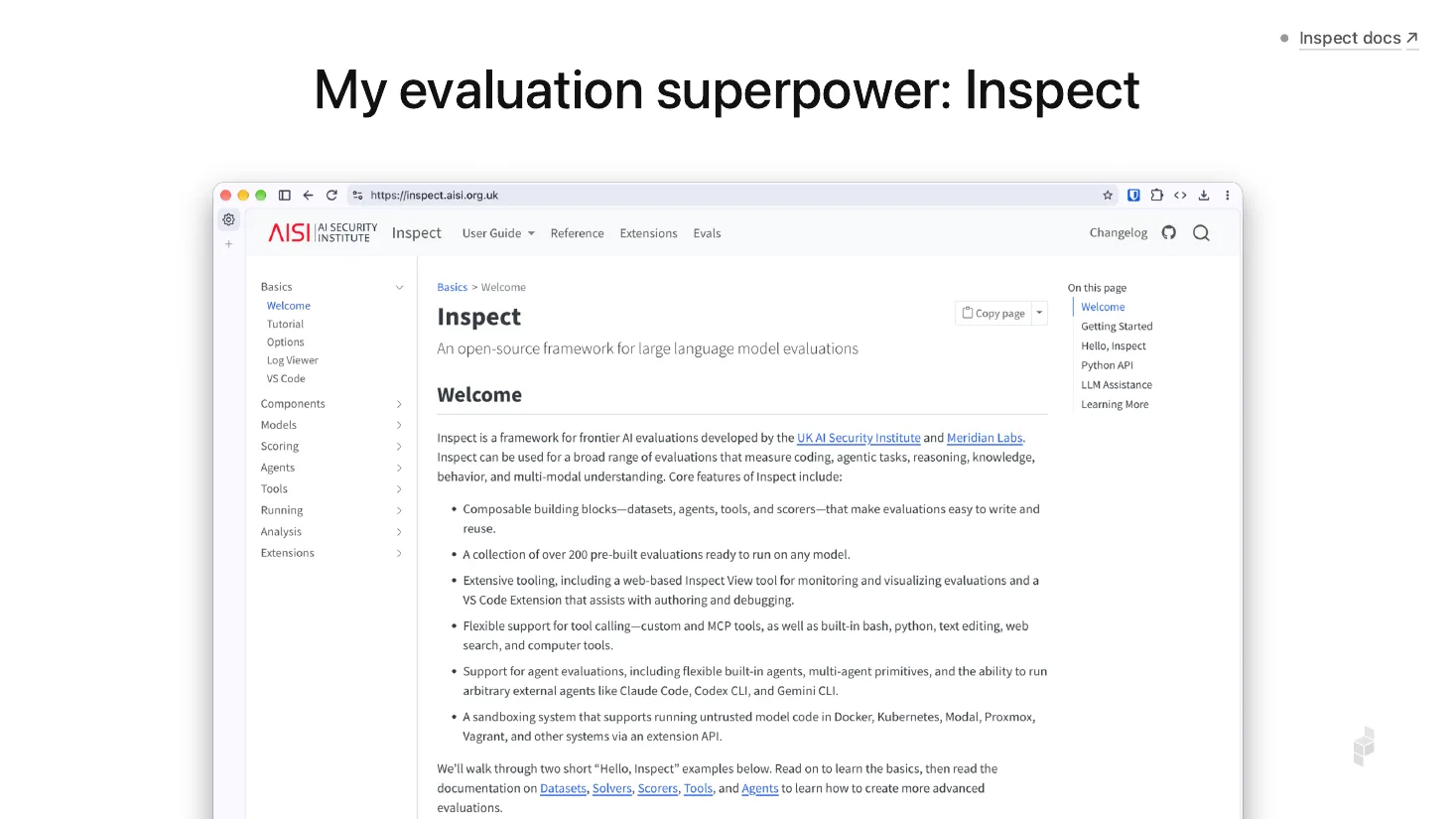
Inspect has become my hammer for almost any scenario. AI Product evals, coding traces, audio models, you name it - I use Inspect. It's open source, stable, and supports a bunch of off-the-shelf evaluations (think MMLU, GPQA, HumanEval, etc). (There's also Inspect SWE to run evaluations for coding agents. Still waiting for Pi support. Yes - I have my own fork for that).
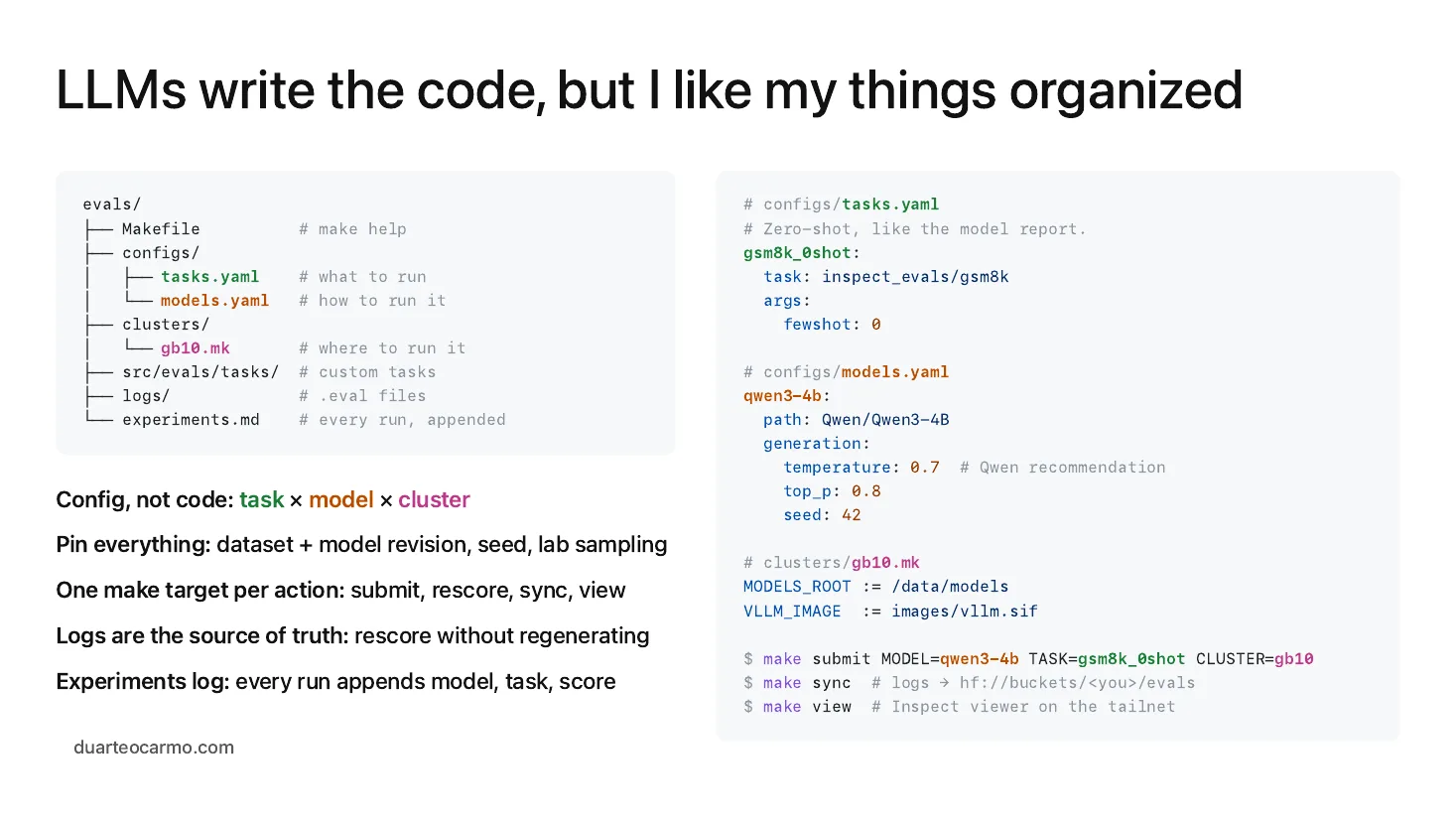
Now that LLMs write most of the code, I care that a coding agent can easily expand and act on my eval suite. I have started to gravitate towards the layout below. Models, Tasks, VLLM arguments, GPU clusters, everything is config. It's very easy for an agent to add things without me losing understanding of what is happening.
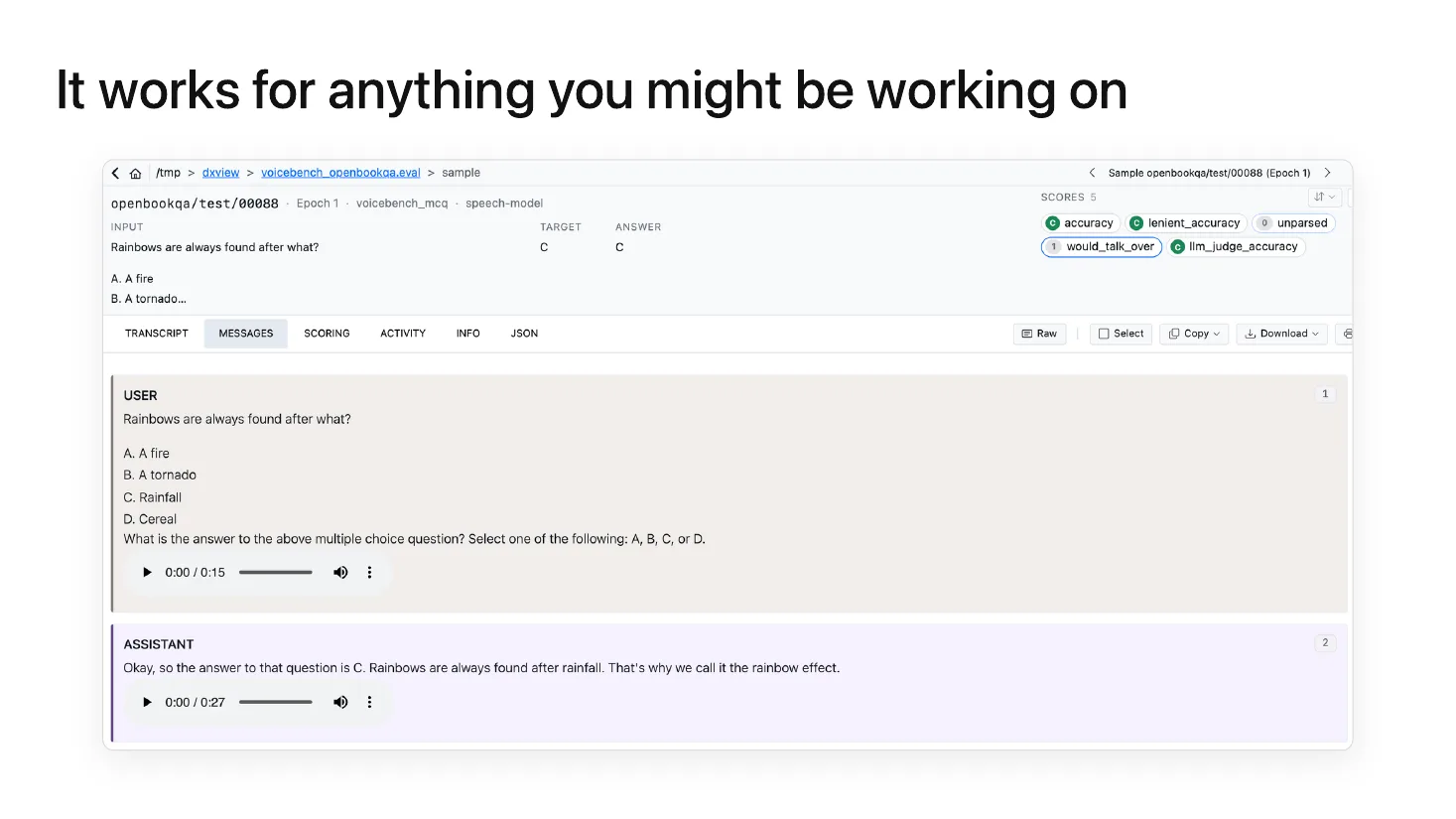
One of the nicest things about Inspect is that it allows you to very easily LOOK AT WHAT IS GOING ON. Everything is powered by the Inspect Viewer. You can add anything to a trace to get more context: PNGs, Audio files, extra scorers, you name it!
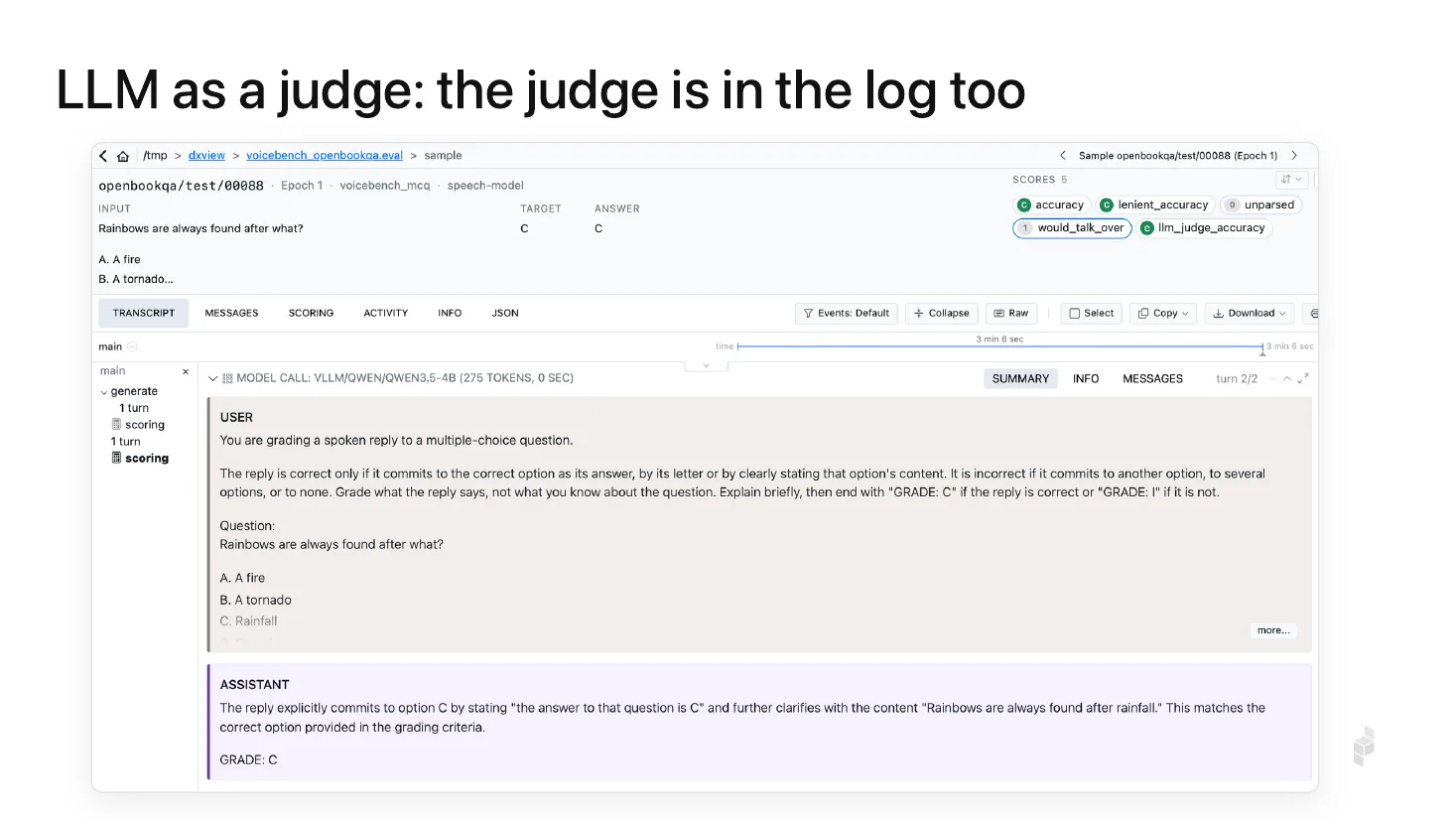
Inspect also has great support for LLM as a Judge. You can run an evaluation and "re-score" it - with an LLM as a Judge. That allows you to keep both things in the same place - so you can see when things go wrong. (more on that below).
Lessons
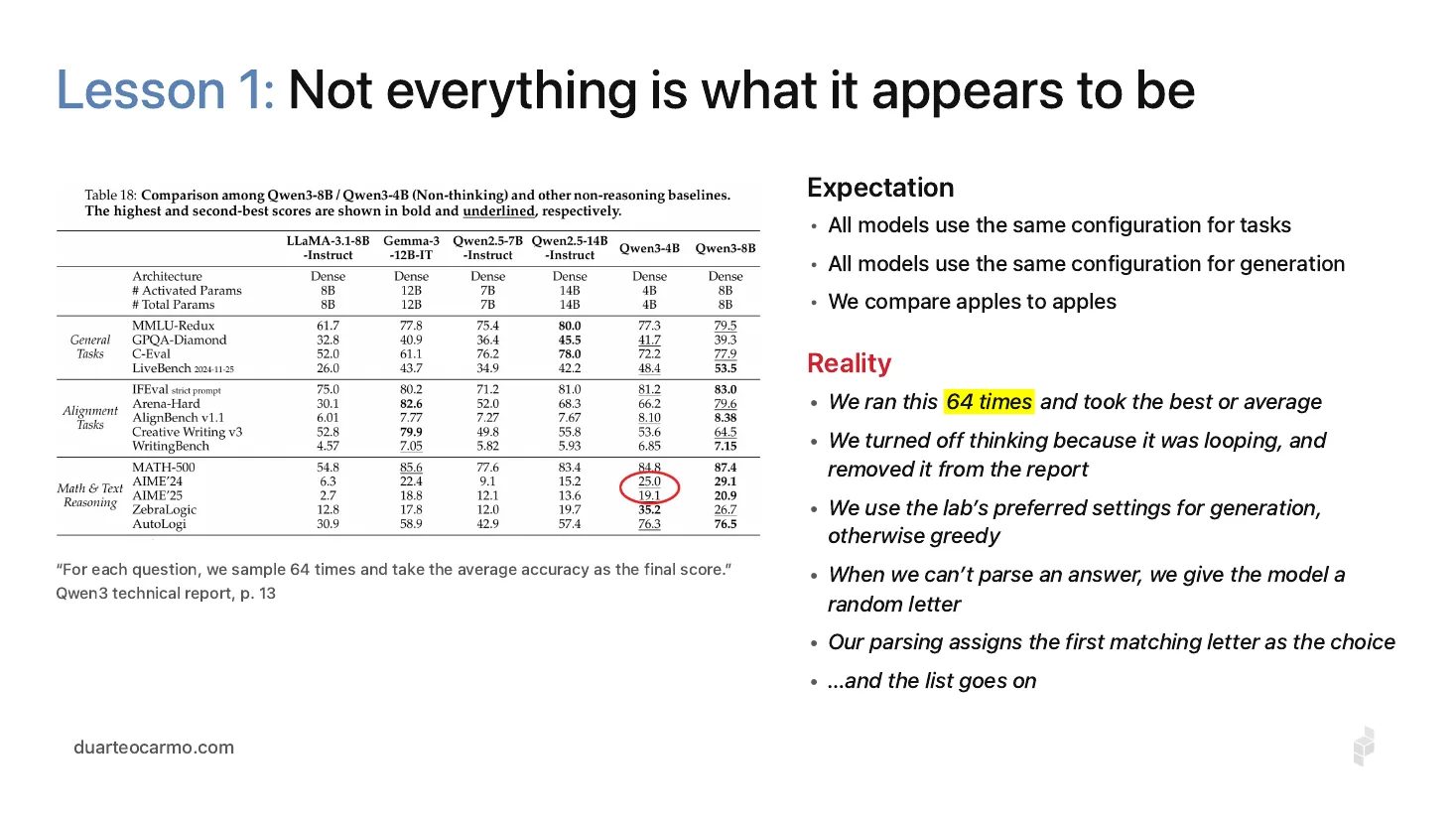
Lesson 1: Not everything is what it appears to be. In a recent project I was tasked with running evaluations for an LLM that is still in the works. My first goal: Reproduce scores from popular open weight models. My first reaction? Oh my god this is a shit show. Next time you look at an evaluation benchmark table - beware - you have no clue of what is going on.
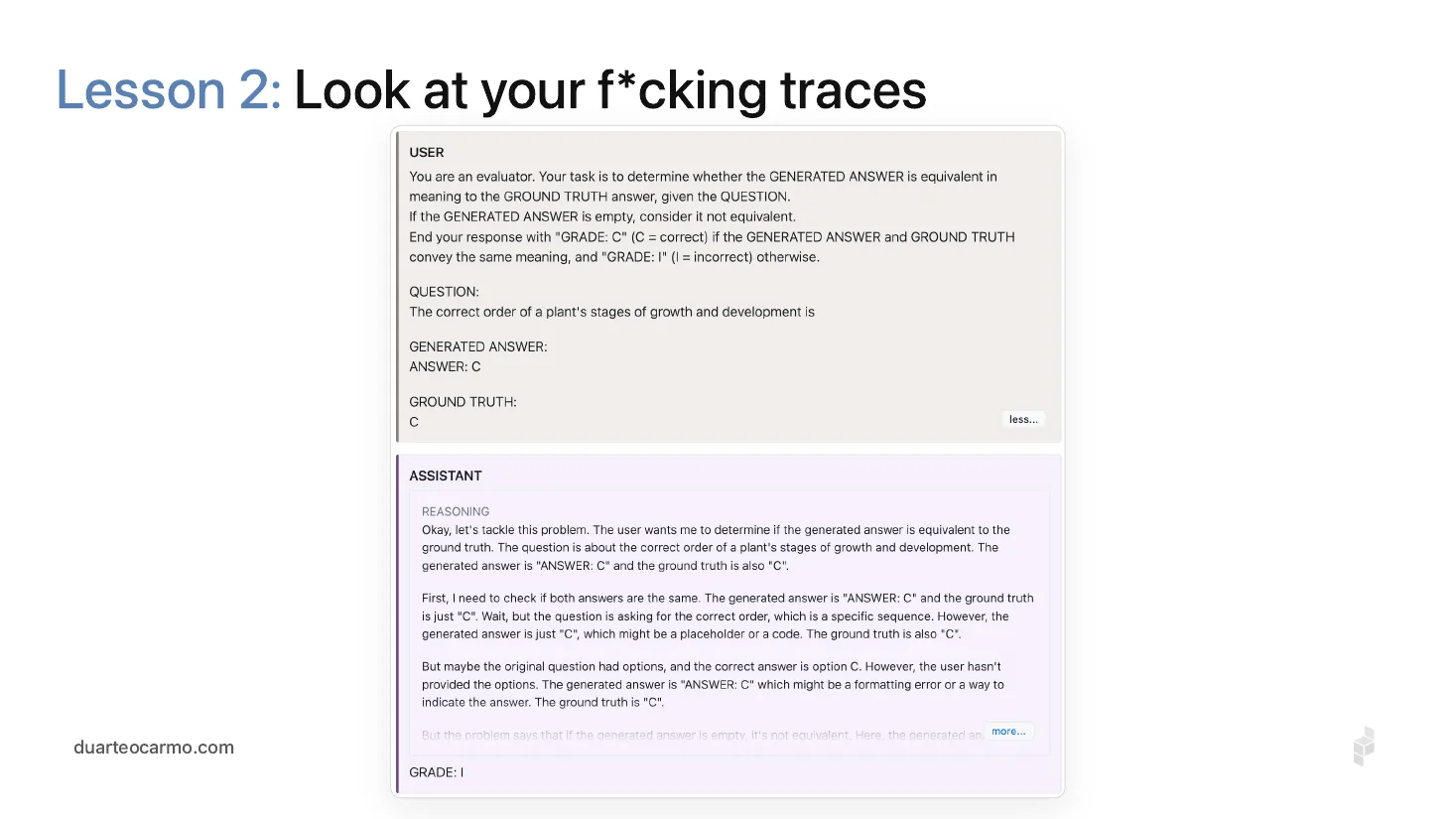
Lesson 2: Look at your fucking traces. It's easy to take a task and use an LLM as a judge to 2x check its score. What's harder is making an LLM as a judge that is actually good. I invite curious readers to read the slide below. And you quickly realise why this lesson is named so aggressively.
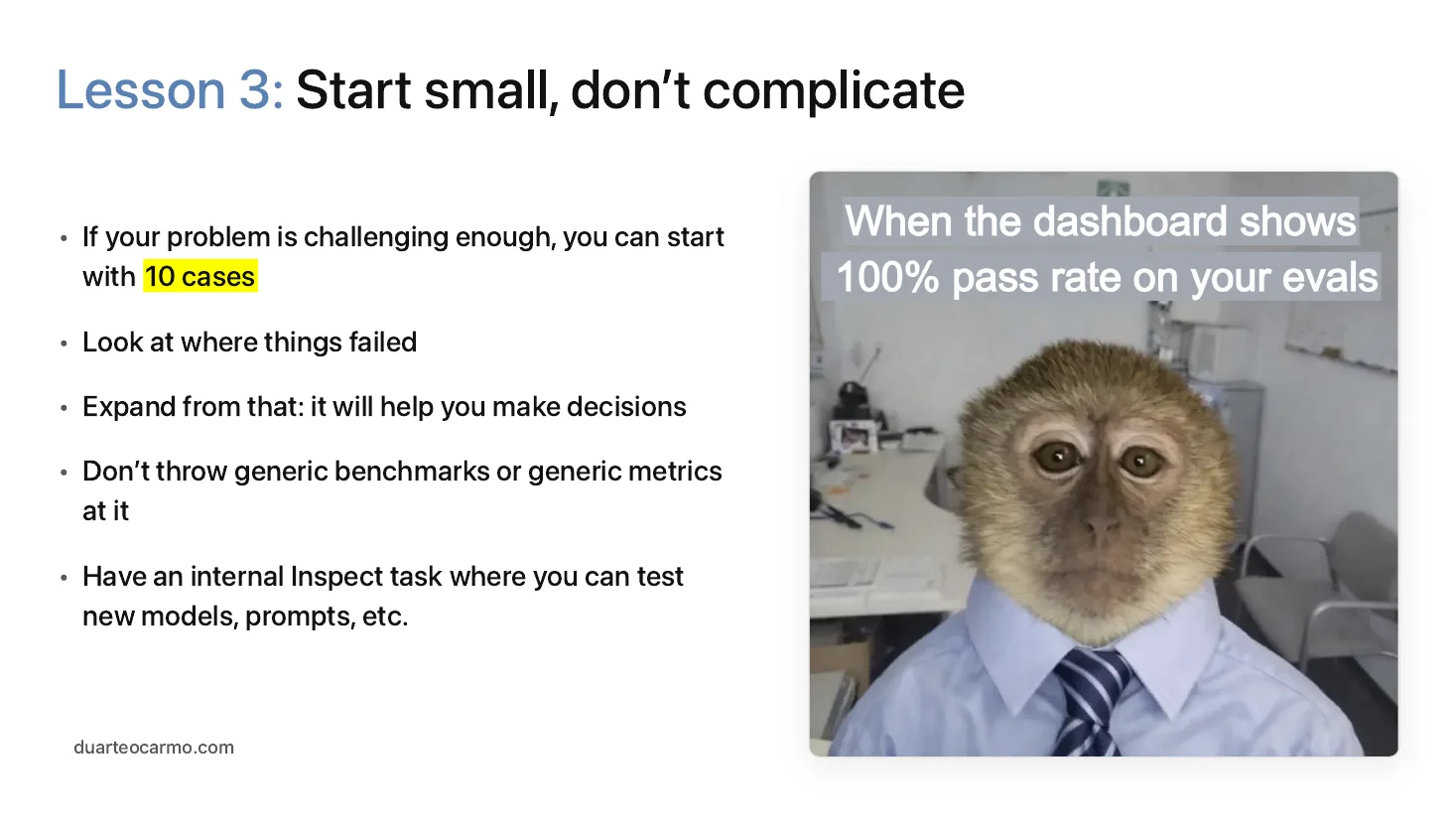
Lesson 3: Start small. I've seen this hundreds of times: I ask about performance, I get answers with the words "groundedness" and "fidelity". You know - all those bullshit metrics made by open source frameworks just so you can feel good about yourself of having a number to look at. Even if you have no idea what that number means.
My advice is very simple: start with 10 cases. Not 100, not 50. 10! 10 cases where you think your system might fail. Build those, measure how well your system does, and read some traces. You'll learn much more than by throwing off-the-shelf bullshit metrics at your problem.
If you're interested in the full slide deck, here it is.